
Calibration Pot
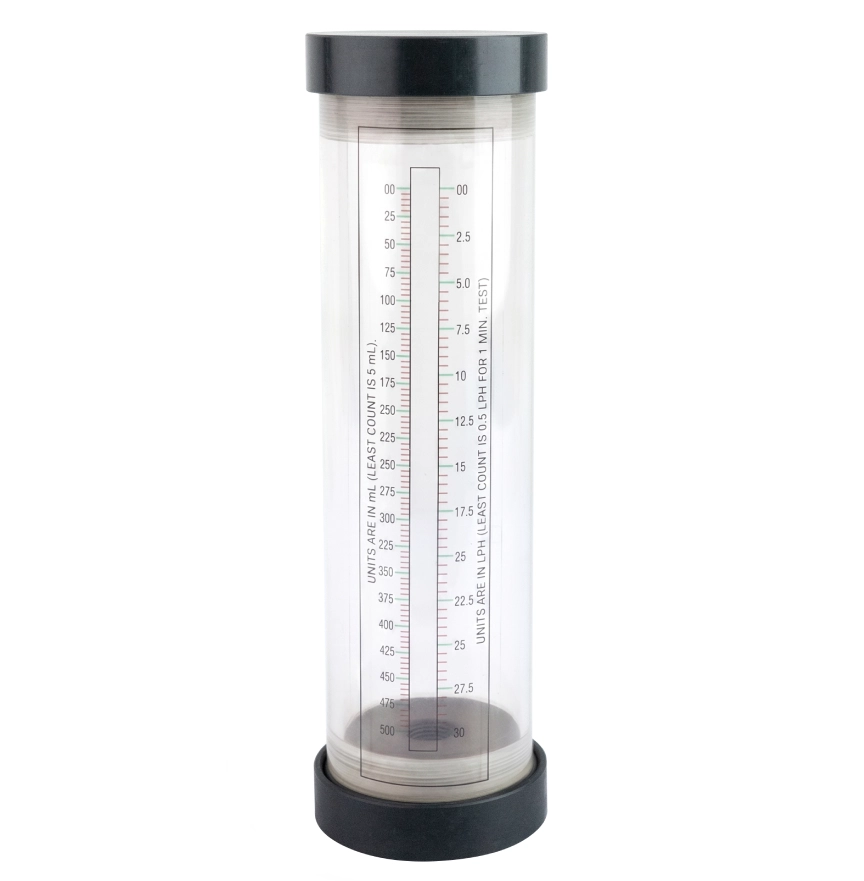
A calibration pot is a cylindrical container, often made of glass or stainless steel, used to verify and adjust the accuracy of measurement devices, particularly flow meters and dosing pumps. It is typically placed on the suction side of a pump and filled with a known volume of liquid to be measured. The pump then draws liquid from the pot, and the volume dispensed is measured against the pot's calibrated markings.
Working Principle:
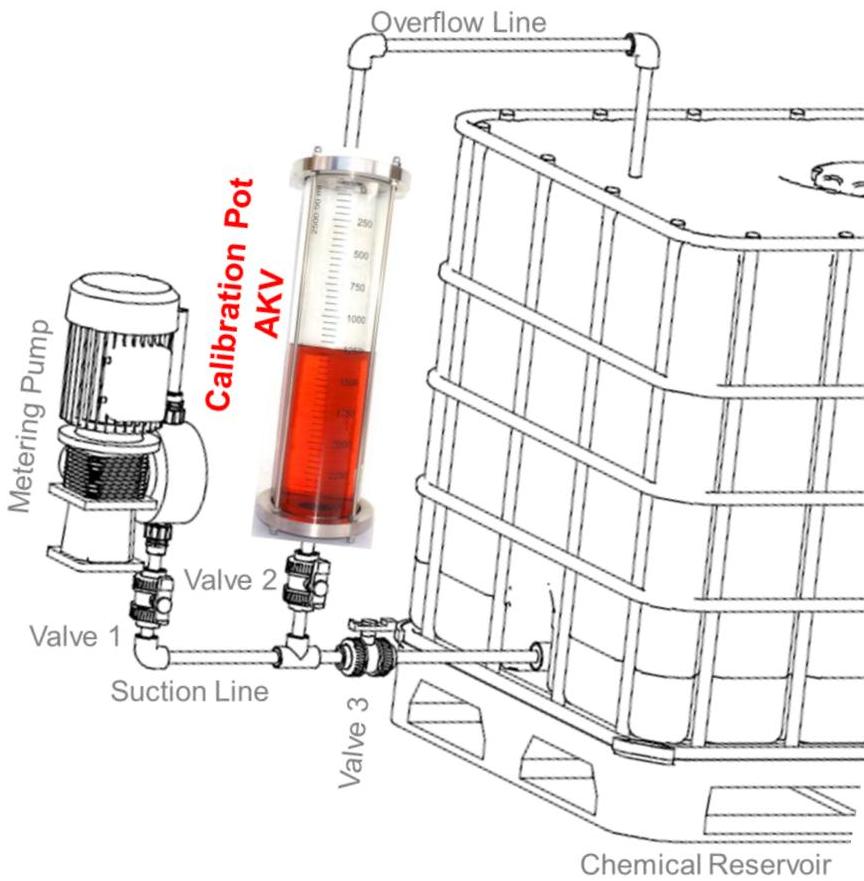
Calibration pot is usually installed on the suction side of the dosing pump. It should be equipped with isolation valves to enable calibration directly from the calibration pot and, after calibration, switch over to the normal flow direction from the chemical feed tank.
To check the dosing pump rate, isolate the chemical inside the calibration pot, leave valve #3 closed and valve #2 fully open. (Refer to the picture below)
Start the pump for one minute of operation and observe the number of marks on the scale the fluid passed.
This value provides the actual metering pump performance per minute for the chemical, considering its concentration and discharge conditions.
Material of construction:
- Glass bottle with Polypropylene (PP)
- Glass bottle with Polyvinyl Chloride (PVC)
- Glass bottle with Polyvinylidene Fluoride (PVDF)
- Glass bottle with Polytetrafluoroethylene (PTFE)
- Glass bottle with Stainless Steel 316 (SS-316)
- Glass bottle with Alloy-20